Neighbour’s Tree Overhanging Your Property in Australia: What You Can Actually Do
If you have ever stood in your backyard looking at your neighbour’s tree hanging over the fence and thought, “Surely this can’t be my responsibility,” you are not alone. A recent discussion on an Australian property forum on Reddit attracted comments from homeowners facing the same issue. Overhanging branches, invasive roots, blocked sunlight, damaged fences, cracked paving, and the awkward neighbour conversations that tend to follow.
Tree disputes are among the most common neighbour issues in Australia, yet they are also among the most misunderstood. Some people avoid the issue because they do not want conflict, while others act too quickly and end up creating legal problems for themselves.
Why Neighbour Tree Disputes Are So Common in Australia
Australia has many trees and many residential blocks where fences sit close together. Trees grow slowly, which means problems often build over time rather than appearing overnight.
Common complaints include branches overhanging fences and dropping leaves into gutters, roots damaging driveways, paving, pipes, or retaining walls, large trees blocking sunlight, and concerns that trees may become unsafe during storms or strong winds.
What makes these disputes particularly stressful is uncertainty. Many homeowners simply do not know where their rights begin and end, which allows frustration to build and communication to break down.
Who Is Responsible for a Tree in Australia
As a general rule, the person who owns the land where the tree is growing is considered the tree owner. This means they are responsible for the tree’s overall health and safety.
However, once parts of the tree extend beyond the property boundary, the situation changes. Overhanging branches and encroaching roots affect neighbouring land, giving the affected neighbour limited rights to protect their property.
It is important to understand that you do not gain ownership of the tree just because it crosses into your property. Your rights relate to managing the impact, not controlling the tree itself.
Can You Cut Overhanging Branches From a Neighbour’s Tree
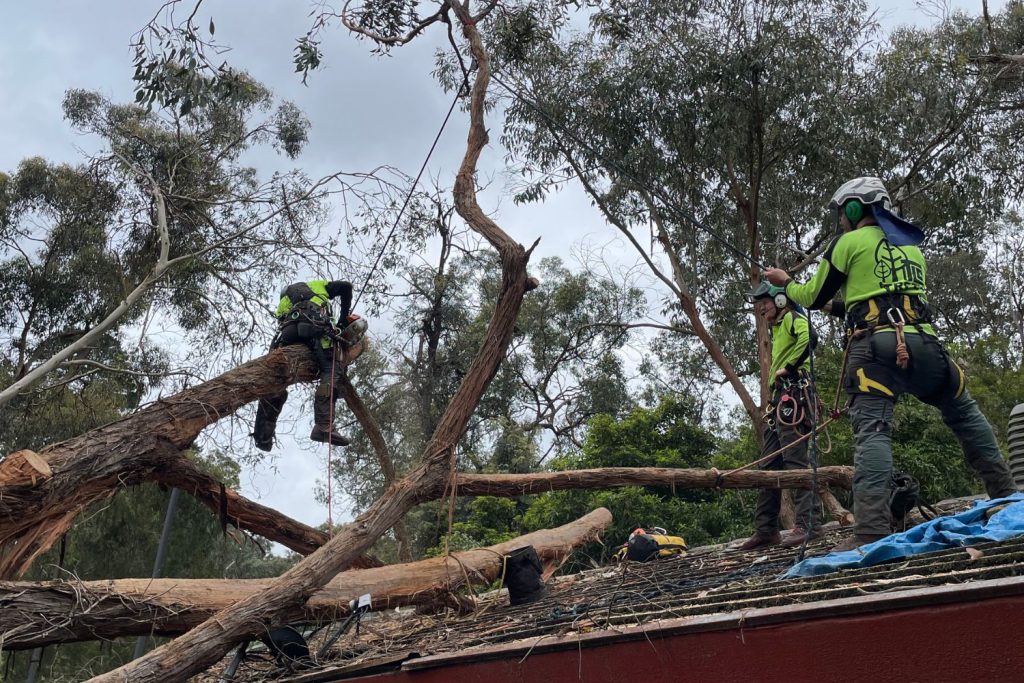
In most parts of Australia, you are allowed to trim branches that overhang onto your property, but only up to the boundary line.
There are conditions that apply.
You cannot enter your neighbour’s property without permission to carry out the work. You must not cut beyond the boundary line. You must not prune in a way that damages or kills the tree. In most cases, you are responsible for the cost of trimming unless a court or tribunal orders otherwise.
If pruning would clearly harm the tree, it is not considered reasonable, even if the branches are on your side of the fence.
What Happens to the Cut Branches
This detail is often overlooked, but it is one of the small things that can either keep a neighbourly relationship intact or quietly make it worse.
In many states, branches, leaves, and fruit that come from a tree are still considered the property of the tree owner, even once they have been cut. That means that technically, the neighbour who owns the tree has the right to decide what happens to that material.
In practice, most neighbours are perfectly happy for you to dispose of the green waste yourself, especially if the pruning was necessary and reasonable. The problem usually arises when nothing is said, and assumptions are made.
Letting your neighbour know what you are planning to do with the cut branches, or simply asking if they would like them back, can prevent misunderstandings. It shows that you are trying to handle the situation fairly rather than acting out of frustration.
A quick conversation or short message before or after pruning may feel unnecessary, but it often goes a long way toward preventing the issue from escalating.

What About Tree Roots Causing Damage
Tree roots are often where neighbour disputes become more serious, because the damage they cause is usually expensive and hard to ignore.
If roots from a neighbour’s tree are damaging your fence, paving, plumbing, driveway, or foundations, you generally have the right to remove roots that are on your side of the boundary. The key condition is that removing those roots must not destabilise or kill the tree. Cutting roots aggressively or without advice can create safety issues and lead to further disputes.
When damage has already occurred, the situation shifts from inconvenience to liability. In some cases, you may be able to seek compensation for repairs or request that your neighbour take action to prevent further damage. This is where evidence becomes important. Clear photos, repair invoices, and professional reports from plumbers, builders, or arborists can help establish the cause of the damage and show that it is ongoing.
Getting expert advice early can also help prevent the problem from getting worse. Addressing root issues carefully and methodically is often far cheaper and less stressful than dealing with major repairs later.
Can You Remove a Neighbour’s Tree Completely
No. You cannot remove or destroy a neighbour’s tree without their permission, even if it is inconvenient or causing problems, unless you have an order from a court, tribunal, or council.
Removing a tree or pruning it so heavily that it dies can result in fines or compensation claims. Tree damage is taken seriously, particularly when it affects safety, property value, or protected vegetation.
If full removal feels like the only solution, formal processes should be followed rather than taking action into your own hands.
What If the Tree Is Protected by the Council
This is where many homeowners get caught out.
Councils across Australia protect certain trees based on species, size, age, or environmental value. When a tree is protected, the rules change. Even basic pruning may require council approval, regardless of whether the tree is on your property or your neighbour’s.
Before trimming large branches or dealing with invasive roots, it is important to check your local council’s tree protection rules. Councils can and do issue fines for unauthorised work, especially where protected trees are damaged or removed.
For New South Wales homeowners, official guidance on how council rules interact with neighbour tree disputes is available here:
Neighbour Tree Laws by State
While the general principles around neighbour trees are similar across Australia, the way disputes are handled can vary significantly from state to state. This is where many homeowners get caught out, because advice that applies in one location may not apply in another.
Some states have specific legislation that deals directly with neighbour tree disputes and sets out clear processes for resolving them. Other states rely more heavily on a combination of council regulations, planning controls, and common law principles. This means the steps you are expected to take, and the options available to you, can differ depending on where you live.
In practice, this affects things like whether you can apply to a tribunal, what evidence is required, whether mediation is expected first, and how much weight is given to issues such as property damage, safety risks, or loss of enjoyment. Councils also play a larger role in some states, particularly where protected trees or local planning controls are involved.
Before taking action, it is important to check the rules that apply in your state and local council area. A quick review of the relevant legislation or government guidance can prevent costly mistakes and help you choose the most appropriate way to resolve the issue.
How to Resolve a Neighbour Tree Dispute Without Escalation
Most neighbour tree disputes do not start with hostility. They usually start with uncertainty and silence.
A calm conversation is often the best first step. Explain the issue clearly and focus on the impact rather than blame. For example, explain that roots are lifting paving or that branches are blocking gutters, rather than accusing your neighbour of negligence.
If face-to-face discussion feels uncomfortable, a polite written message can help keep communication clear and respectful.
Independent advice from a qualified arborist can also help. When an expert explains the risks and options, emotions tend to settle, and discussions become more productive.
When to Involve Council, Mediation, or Legal Help
If a tree poses a safety risk, causes ongoing damage, or your neighbour refuses reasonable solutions, escalation may be necessary.
Local councils can advise on tree protection and safety issues. Community mediation services are available in many areas and can help resolve disputes without legal proceedings.
Legal advice or tribunal applications should be a last resort, but they provide a structured pathway when communication breaks down.

Common Mistakes Homeowners Make
Acting Before Checking the Rules
One of the most common mistakes is taking action without understanding what is legally allowed. Cutting back a tree too much, pruning beyond the boundary, or ignoring council protections can quickly turn a minor issue into a serious legal problem. Even well-intentioned work can lead to fines or compensation claims if the rules are not followed.
Letting Frustration Build Over Time
Another common mistake is doing nothing for too long. Tree problems rarely fix themselves, and resentment can quietly grow as damage worsens or inconvenience continues. Delaying the conversation often makes the issue harder to resolve later, especially once repairs or safety concerns are involved.
Assuming All Tree Laws Are the Same Everywhere
Tree and neighbour laws vary between states and even between councils. Relying on general advice from friends, social media, or overseas sources can lead homeowners astray. What is allowed in one area may not apply in another, so checking local rules is essential.
Skipping Professional Advice
Many disputes escalate because homeowners try to handle complex tree issues on their own. Arborists, builders, and plumbers can provide expert input that clarifies what is happening and what options are available. Professional advice often prevents mistakes that are far more expensive to fix later.
Damaging the Neighbour Relationship
Focusing solely on the problem, rather than the relationship, can be another costly mistake. Aggressive pruning, silence, or legal threats as a first step can damage trust and make cooperation difficult. In many cases, calm communication early on leads to faster and more practical outcomes.
Frequently Asked Questions
Can I cut my neighbour’s tree if it hangs over my fence?
In most cases, you can trim branches that overhang your property back to the boundary line, provided you do not damage the tree or enter your neighbour’s land without permission.
Who pays for trimming overhanging branches?
Usually, the person requesting the trimming pays, unless a tribunal or court orders otherwise.
Can my neighbour sue me for cutting their tree?
Yes. If you cut beyond your legal rights, damage the tree, or ignore council protections, your neighbour may seek compensation.
What if my neighbour’s tree is damaging my property
Document the damage, seek professional advice, and attempt to resolve the issue directly. Legal or tribunal options may be available if the problem continues.
Do I need council approval to prune a neighbour’s tree?
Sometimes yes, particularly if the tree is protected. Always check with your local council before carrying out significant work.
Key Takeaways
Neighbour tree disputes are frustrating, but they do not have to turn into long-term conflicts. Knowing your rights, checking local rules, and approaching the issue calmly puts you in the strongest position to protect both your property and your peace of mind.
You can usually trim overhanging branches back to the boundary line if you do so carefully and legally. You cannot remove or kill a neighbour’s tree without permission or an official order. Tree roots causing damage may justify further action when supported by evidence. Council rules often override assumptions. Clear communication prevents many disputes from escalating.
What to Do Next
If a neighbour’s tree is affecting your property, the most important thing is not to rush into action. Taking a moment to understand your rights, check local rules, and gather the right information can save you time, money, and unnecessary stress.
If you are unsure where you stand, start by documenting the issue and checking your local council guidelines. A short conversation with your neighbour or advice from a qualified professional can often resolve the problem before it escalates.
When tree issues become more complex or start causing damage, getting expert guidance early can make all the difference. Whether that means speaking with an arborist, a property professional, or seeking legal advice, the goal is the same. Protect your property while keeping the situation as calm and constructive as possible.
Taking the right steps now helps avoid bigger problems later and gives you confidence that you are handling the situation properly.