Why Are Pine Trees Dying in Park Orchards? Signs of Disease Every Homeowner Should Know
If you’ve lived in Park Orchards for a while, you’ve probably noticed that pine trees are part of what gives the suburb its unique character. They provide shade, privacy, and a beautiful natural backdrop that many homeowners love. But lately, we’ve been seeing more pine trees showing signs of decline, and it’s becoming a growing concern throughout the area.
Many people assume that pine trees are almost impossible to kill because they seem so tough. The truth is that pine trees can suffer from disease, pests, poor growing conditions, and age related decline. Once symptoms become obvious, the problem is often more advanced than people realise.
If you’re starting to notice brown needles, dying branches, or a pine tree that simply doesn’t look healthy anymore, don’t ignore it. The earlier you identify the problem, the better your chances of protecting the tree and preventing potential hazards around your property.
In this guide, I’ll explain why pine trees are declining in Park Orchards, what signs you should look for, and when it’s time to call a qualified arborist.
Why Park Orchards Has So Many Pine Trees
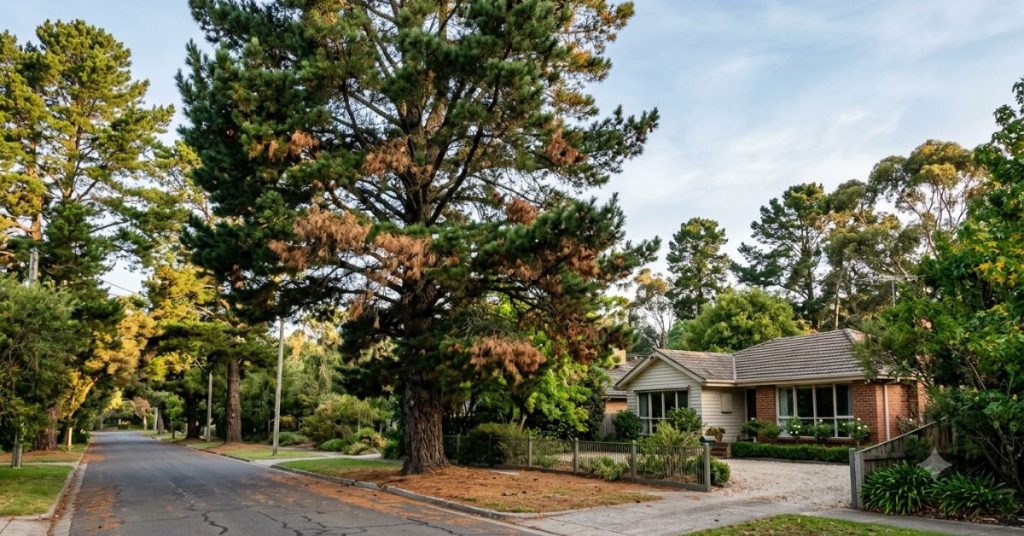
Park Orchards has always been known for its leafy streets, spacious properties, and established gardens. Many homes were built among mature trees, including large pine species that were planted decades ago.
Over the years these trees have become part of the local landscape. Many now tower above homes and neighbouring properties, creating impressive canopies that add value and beauty.
Unfortunately, mature pine trees also become more vulnerable as they age. Stress from changing weather patterns, drought, soil compaction, construction work, and disease can all weaken a tree’s natural ability to defend itself.
That is one reason why we’re seeing more declining pine trees throughout Park Orchards than we have in previous years.
Why Are Pine Trees Dying?
There isn’t always one simple answer.
When I inspect a declining pine tree, I look at several possible causes before making a recommendation. In many cases, multiple factors are affecting the tree at the same time.
Some of the most common causes include:
- Fungal diseases
- Root diseases
- Bark beetles and wood boring insects
- Extended drought stress
- Poor soil drainage
- Root damage from excavation or construction
- Lightning damage
- Old age
- Storm damage
- Competition from nearby trees
Each of these problems affects the tree differently, but they often produce similar symptoms. That is why a professional inspection is so important.
The Pine Tree Disease We Are Starting to See More Often
One concern that is beginning to emerge in areas with large populations of mature pines, including Park Orchards, is fungal disease.
Fungal infections can attack the roots, trunk, bark, or needles depending on the species involved. Once the disease becomes established, it may slowly weaken the tree over several years before homeowners notice anything is wrong.
Some fungal diseases spread through root systems that connect neighbouring trees. Others spread through spores carried by wind or rain.
Because Park Orchards has many mature pine trees growing close together, diseases can potentially affect multiple properties over time.
This doesn’t mean every pine tree is at risk, but it does mean homeowners should pay attention to changes in their trees rather than assuming everything is normal.

Early Warning Signs Your Pine Tree May Be Sick
One of the biggest mistakes I see homeowners make is waiting until a pine tree is almost dead before asking someone to inspect it.
Healthy pine trees usually stay green all year round. While older needles naturally fall off, sudden or widespread changes should never be ignored.
Here are some warning signs to watch for.
Brown Needles
Brown needles are usually the first symptom people notice.
If only the older needles inside the tree are turning brown, that may be part of the normal seasonal cycle.
However, if entire branches are becoming brown or large sections of the canopy are changing colour, the tree could be under serious stress.
Dead Branches
Dead branches often indicate that part of the tree is no longer receiving enough resouces.
If you notice branches dying from the top down, it may suggest disease or root problems.
Thinning Canopy
A healthy pine should have dense foliage.
If the canopy is becoming thin or patchy, something is affecting the tree’s health.
Excessive Sap
Large amounts of sap flowing from the trunk may indicate insects, bark damage, or disease.
Cracks in the Trunk
Long vertical cracks can develop when a tree is under stress.
While not every crack is dangerous, they should always be inspected.
Mushrooms Around the Base
Mushrooms growing near the roots can be a warning sign that decay is occurring underground.
Some fungi feed on dead material, while others actively attack living roots.
Leaning Tree
If your pine suddenly starts leaning, especially after heavy rain or strong winds, the root system may have weakened.
This should be treated as a priority because tree failure becomes much more likely.
Can a Diseased Pine Tree Be Saved?
Sometimes yes.
Sometimes no.
The answer depends on what is causing the decline and how advanced the problem has become.
If I inspect a tree early enough, treatment may involve improving soil conditions, pruning affected branches, reducing stress, or monitoring the tree over time.
Unfortunately, if disease has spread extensively through the trunk or root system, removal is often the safest option.
That is why acting early gives you the most choices.
Why Waiting Can Make Things Worse
It’s easy to hope a tree will recover on its own.
Unfortunately, many diseases continue spreading while the tree appears only slightly unhealthy.
Over time the tree becomes weaker.
Branches begin dying.
The trunk may start decaying internally.
Eventually the tree becomes a safety risk.
Large pine trees can weigh several tonnes. Even a single branch can cause significant damage if it falls onto a house, car, fence, or person.
Early inspections are almost always less expensive than dealing with emergency tree failures after storms.
Are Diseased Pine Trees Dangerous?
Not every diseased pine tree is dangerous.
Some can remain structurally sound for years.
Others become unstable much sooner.
This depends on where the disease is affecting the tree.
If decay develops inside the trunk or major roots, the structural strength of the tree can decrease significantly even though the outside still appears reasonably healthy.
That is why visual inspections alone do not always tell the full story.
As qualified arborists, we assess the overall condition of the tree before recommending the safest course of action.
Can Pine Tree Disease Spread?
Yes, some diseases can spread.
Certain fungal diseases move through root systems where neighbouring trees have naturally grown together underground.
Others release spores that spread through the air during wet weather.
Insects can also carry diseases from one weakened tree to another.
This is another reason why removing a severely infected tree can sometimes help protect surrounding trees.
How We Assess a Pine Tree
Every tree is different.
Rather than making assumptions, we carry out a detailed inspection to understand exactly what is happening.
During an assessment we look at:
- The condition of the canopy
- Needle colour
- Branch dieback
- Trunk condition
- Root flare
- Soil health
- Signs of fungal growth
- Insect activity
- Structural stability
- Nearby environmental factors
Only after understanding the whole picture can I recommend the most appropriate solution.
What Happens If a Tree Needs Removing?
Sometimes removal is simply the safest option.
Large pine trees can become unpredictable once disease affects their structural integrity.
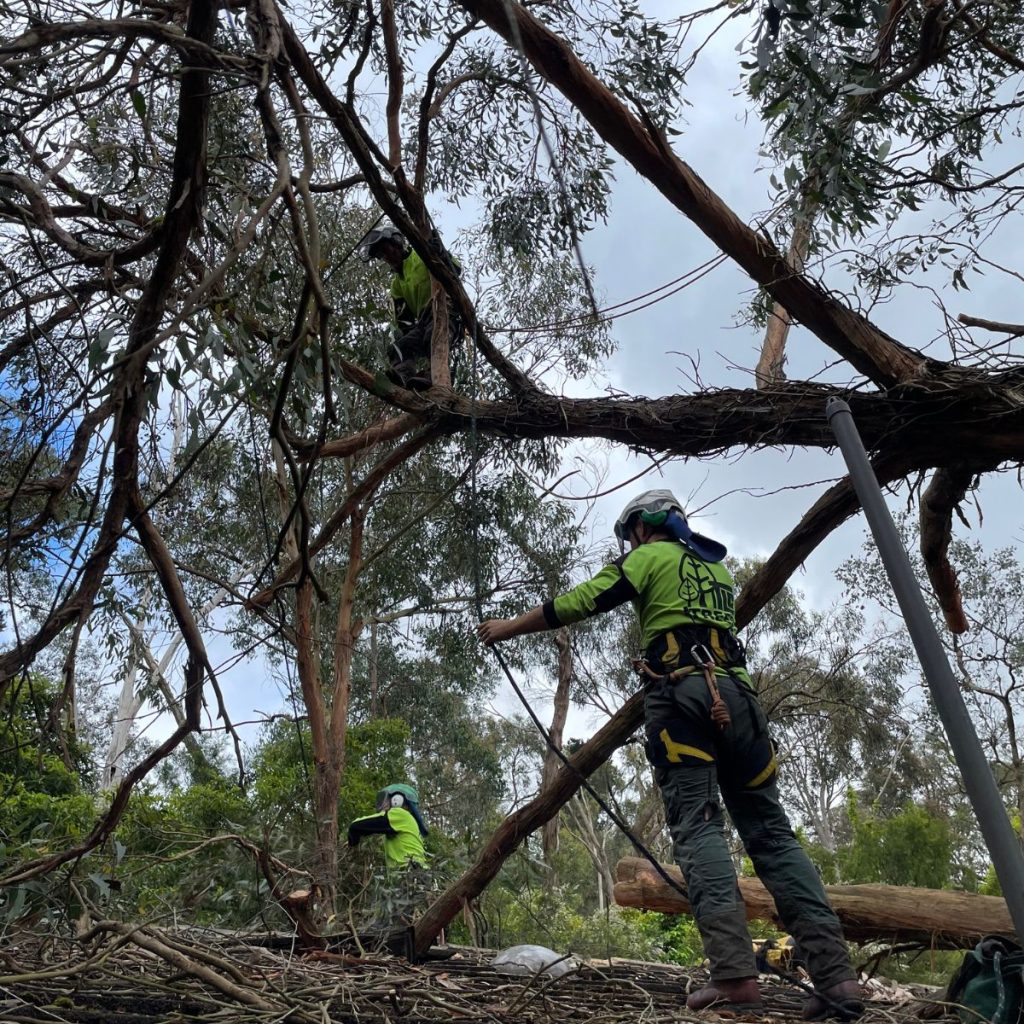
When removal is necessary, I plan the safest method based on the tree’s size, surrounding buildings, nearby powerlines, and available access.
Professional tree removal protects your property while minimising disruption to the surrounding landscape.
Where possible, I also recommend stump removal or stump grinding to reduce the chance of future fungal issues and make the area easier to landscape.
How to Keep Your Pine Trees Healthy
While no tree is completely immune to disease, there are several ways you can reduce the risk of future problems.
Water During Extended Dry Periods
Even mature trees benefit from occasional deep watering during long dry spells.
Avoid Damaging Roots
Construction work, trenching, and heavy machinery can damage roots and make trees more vulnerable.
Mulch Around the Base
Organic mulch helps retain moisture and improve soil health.
Keep mulch away from direct contact with the trunk.
Watch for Early Changes
Regularly check your trees for changes in colour, growth, or branch health.
Small problems are often easier to manage than advanced decline.
Arrange Professional Inspections
If you have several mature pine trees on your property, periodic inspections can identify developing issues before they become major hazards.
Why Local Experience Matters
Park Orchards has its own unique environment.
The combination of reactive clay and sandy soils, mature vegetation, large residential blocks, and established pine trees creates different challenges compared to many other Melbourne suburbs.
Because we work with trees across Melbourne’s eastern suburbs, we understand the common issues affecting local species and know what warning signs to look for.
Whether the problem is disease, storm damage, poor soil, or simple age related decline, every recommendation is based on the actual condition of your tree rather than guesswork.
When Should You Call an Arborist?
You do not need to wait until your pine tree looks completely dead.
In fact, we would much rather inspect a tree while there are still options available.
Consider arranging an inspection if you notice:
- Rapid browning of needles
- Dead branches increasing each year
- Large cracks developing
- Mushrooms near the trunk
- Excessive leaning
- Falling branches
- Bark peeling away
- Large areas of missing foliage
- Signs of insect activity
- Any sudden change in the appearance of the tree
The sooner the cause is identified, the easier it is to make informed decisions about treatment or removal.
Final Thoughts
Pine trees are one of the defining features of Park Orchards, and it is always disappointing to see one begin to decline.
While not every unhealthy pine tree can be saved, early identification gives you the best chance of protecting both the tree and your property.
If you’ve noticed your pine tree isn’t looking as healthy as it once did, don’t wait until the next storm exposes a much bigger problem.
We are always happy to assess the condition of your trees, explain what’s causing the decline, and recommend the safest and most practical solution. Sometimes that means preserving a healthy tree. Other times it means removing a dangerous one before it becomes a serious hazard.
Either way, having the right information early can save you time, money, and unnecessary stress.
Frequently Asked Questions
Why are pine trees turning brown in Park Orchards?
Brown needles can be caused by fungal disease, drought stress, root damage, insect attack, poor soil conditions, or natural needle shedding. A professional inspection can determine whether the browning is normal or a sign of a more serious problem.
Can a diseased pine tree recover?
Some pine trees can recover if the underlying issue is identified and treated early. However, trees with advanced root disease or severe structural decay often need to be removed for safety.
How do I know if my pine tree is dangerous?
Dead branches, trunk cracks, leaning, root damage, and large sections of dying foliage can all indicate an increased risk of tree failure. An arborist can assess whether the tree remains structurally sound.
Can pine tree disease spread to other trees?
Yes. Some fungal diseases spread through connected root systems or airborne spores. Early diagnosis can help reduce the risk of the disease affecting nearby trees.
Should I remove a pine tree that is dying?
Not always. Some trees can be managed with treatment or ongoing monitoring. If the tree poses a safety risk or has extensive disease, removal may be the safest solution.
How often should mature pine trees be inspected?
For large mature pine trees, especially those close to homes, I recommend having them professionally inspected every one to three years, or sooner if you notice changes in their health or structure.