Let me talk to you the same way I would if I were standing in your yard, looking up at that tree with you.
Most people don’t reach out to someone like me until something feels off. The tree may be leaning more than it used to. Trees may be getting too close to your roof. Or a recent storm made you realise how much damage one tree could cause if things go wrong.
By the time you’re thinking about removal, this decision matters more than you think.
As an arborist, my job is not just to remove trees. It is to assess risk, understand tree health, and make sure any work done is safe, controlled, and appropriate for your property. If you are trying to hire the right tree removal company, here is how I would guide you.
First, Understand What You Are Actually Dealing With
Before we even talk about hiring, you need to understand that not every tree needs to be removed.
When I assess a tree, I look at:
- Structural integrity of the trunk
- Root stability and soil condition
- Signs of disease, decay, or pest damage
- Lean direction and weight distribution
- Proximity to structures and hazards
Some trees look dangerous but are structurally sound. Others look fine but are already compromised internally.
This is why a proper assessment matters. A good company should evaluate first and recommend second. If someone immediately suggests removal without explaining why, that is worth questioning.
Licensing and Insurance Are Non-Negotiable
If there is one thing I want you to take seriously, it is this.
Never hire a tree removal company that cannot prove they are licensed and insured.
Being an arborist level 5, I can tell you this is not just a formality. It is a baseline requirement for doing this work responsibly.
In this field, we are dealing with heavy loads, unpredictable movement, and real risk to people and property. Even with proper training and planning, things can go wrong. That is exactly why licensing and insurance exist. They are there to protect you, your home, and everyone involved in the job.
When a company is properly licensed, it means they have met the standards required to operate professionally. When they are insured, it means you are not left carrying the burden if something unexpected happens.
If a company cannot show you proof of both, that is not a small oversight. It is a decision that puts you at risk, and it is one you should never accept.
Tree work involves risk, even for experienced professionals. That is why proper coverage exists.
You should always ask for:
- Liability insurance
- Workers’ compensation
If a worker gets injured on your property and the company is not covered, that responsibility can fall on you. The same applies to property damage.
A professional company will provide documentation without hesitation. If they avoid the question, walk away.
Experience Is What Keeps Things Safe
Tree removal is not basic labour. It is technical, calculated work.
Every time I approach a removal, I am thinking about physics, balance, and control.
I consider:
- Where the weight is concentrated
- How each cut affects stability
- How to control each section as it comes down
Removing a tree in an open yard is straightforward. Removing one near a home, fence, or power line requires a completely different level of planning. Not to mention, they should also be well educated of different laws about touching trees such as Canopy Tree Laws.
Ask how long they have been doing this. Ask what kinds of jobs they handle regularly. A skilled crew will explain their approach in a way that makes sense without overcomplicating it.

A Proper Quote Should Be Detailed and Transparent
One of the biggest mistakes homeowners make is comparing prices without understanding what those prices include.
A professional quote should clearly outline:
- Full scope of the work
- Cleanup and debris removal
- Whether stump grinding is included
- Equipment needed for the job
- Any potential additional costs
If a quote feels vague, it usually is.
You should never have to guess what you are paying for. Clarity upfront prevents problems later.

What Actually Affects Tree Removal Cost
Let’s break this down in a way most companies do not.
Tree removal pricing is based on risk, time, and complexity. Here are the biggest factors.
Tree Size
Larger trees take more time, more cuts, and more control. That naturally increases cost.
Location
A tree in an open yard is easier to remove than one surrounded by structures or obstacles.
Risk Level
Trees near homes, power lines, or roads require precision and controlled removal methods.
Equipment
Some jobs require lifts, cranes, or advanced rigging systems.
Cleanup and Extras
Stump grinding, hauling debris, and site cleanup can affect the final price.
In real terms, a small tree in an open space will cost significantly less than a large tree hanging over your house. That difference reflects the level of care required.

Why the Cheapest Option Can Backfire
I understand wanting to save money. But in this industry, cheaper often means something important is missing.
That could be:
- Proper insurance
- Skilled labor
- Professional equipment
- Thorough cleanup
Cutting corners in tree removal is risky. You are not just paying to have a tree removed. You are paying for control, safety, and accountability.
How We Handle Difficult Tree Removals
This is where experience really shows.
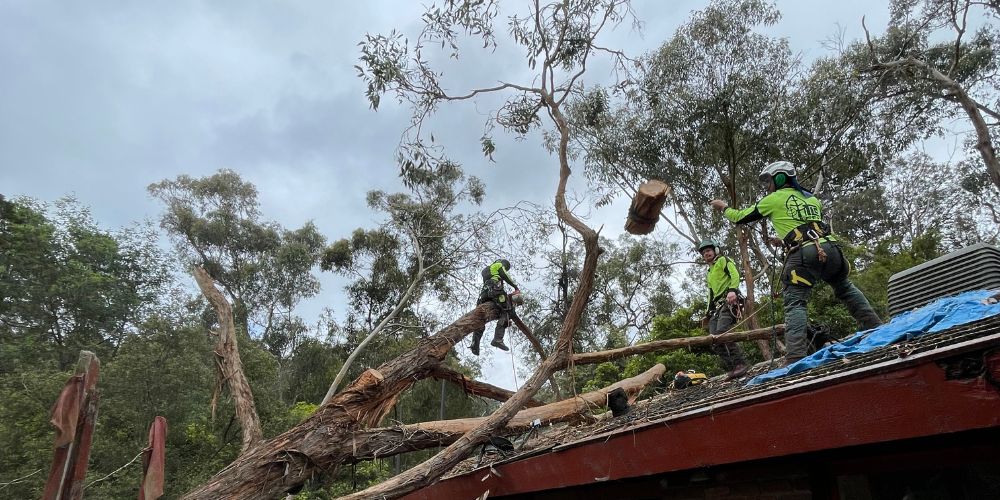
For trees in tight or hazardous spaces, we do not simply cut and drop. We dismantle the tree piece by piece.
That process involves:
- Securing rigging points high in the tree
- Using ropes to control each section
- Lowering limbs carefully instead of letting them fall
- Managing weight distribution at every stage
In some cases, we bring in specialised equipment, such as lifts or cranes, to maintain full control.
This approach takes more time, but it protects your home, your landscaping, and everything around it.

Protecting Your Property During Removal
A professional job is not just about removing the tree. It is about protecting everything around it.
We take steps such as:
- Planning fall zones and controlled lowering paths
- Using protective barriers or mats when needed
- Positioning equipment carefully to avoid damage
- Coordinating the crew to maintain control at all times
At the end of the job, your property should feel respected, not disrupted.
What the Process Should Feel Like From Start to Finish
A well-run tree removal job should feel organised and predictable.
Here is what you should expect:
Assessment
We evaluate the tree and explain what is actually going on.
Clear Recommendation
You understand whether removal is necessary or if other options exist.
Detailed Quote
Everything is outlined so there are no surprises.
Scheduled Work
The job is planned at a time that works for you.
Safe Removal
Each step is controlled and intentional.
Full Cleanup
The area is left clean and safe.
If any part of that process feels rushed or unclear, it is worth asking questions.
Permits and Local Considerations
Some trees cannot be removed without approval, depending on your location.
This usually applies to:
- Protected species
- Large or heritage trees
- Trees in regulated areas
A professional company will either handle permits or guide you through the process clearly. Skipping this step can lead to fines or complications later.

When Removal Is the Right Decision
There are situations where removal is the safest and most responsible choice.
These include:
- Dead or dying trees
- Significant structural damage
- Severe leaning toward structures
- Root failure or soil instability
In these cases, waiting increases risk.
When Removal Is Not Necessary
Not every problem requires removing the entire tree.
If the tree is healthy but overgrown, trimming may solve the issue. If certain branches are the concern, targeted pruning can restore balance and safety.
A trustworthy arborist will recommend what is best for you, even if it means less work.
Red Flags You Should Never Ignore
If you were asking me for advice as a friend, I would tell you to watch out for these:
- Door-to-door offers after storms
- Requests for full payment up front
- No proof of insurance
- No written agreement
- Pressure to decide quickly
These are warning signs of risk, not professionalism.
A Simple Hiring Checklist
Before you make your decision, make sure you can confidently say yes to the following:
- The company is licensed and insured
- The quote is detailed and transparent
- Reviews show consistent positive experiences
- The process has been clearly explained
- Pricing is fair and reasonable
- There is no pressure to commit
If all of these are in place, you are likely making a solid choice.
If I Were Standing in Your Yard Right Now
I would not start by trying to sell you anything.
I would ask what you have noticed and what concerns you. Then I would assess the tree and explain what is actually happening.
From there, I would give you clear options. Sometimes that means removal. Sometimes it does not.
But the goal is always the same. Help you make the right decision with confidence.
Let’s Take the Next Step
If you have a tree that is starting to concern you, it is worth getting a professional opinion.
You do not need to commit right away. A proper assessment will tell you:
- Whether removal is necessary
- What the safest approach looks like
- What kind of cost to expect
At TLC Trees, this is exactly how we approach every job: no pressure, no guesswork, just honest guidance based on what is best for your situation.
If you are ready, reach out and let’s take a look at your tree together. One conversation now can prevent a much bigger problem later.
FAQs
1. How do I know if a tree is an emergency removal?
If a tree is leaning suddenly, has large cracked limbs, or is close to falling on a structure, it should be treated as urgent. Storm damage and exposed roots are also warning signs. In these cases, it’s best to have an arborist assess it as soon as possible.
2. Will I need to be home during the tree removal?
In most cases, you do not need to be present the entire time. However, it is helpful to be available at the start to confirm details and access. A professional team will handle the job safely and keep you updated if needed.
3. What happens if bad weather is forecast on removal day?
Safety always comes first, so jobs may be rescheduled if conditions are unsafe. High winds or heavy rain can make tree removal more dangerous and unpredictable. A reliable company will communicate clearly and prioritize safe timing.
4. Can tree roots continue causing problems after removal?
Yes, if the stump and root system are left in place, they can still affect nearby structures or landscaping. Roots may decay over time, but in some cases, they can continue to interfere with pipes or foundations. Stump grinding is often recommended to prevent long-term issues.